Mary Ruthven's Plantation
Young Captain Jack · The Son of a SoldierMary Ruthven's Plantation, also called St. John's plantation or Mrs. Mary Ruthven's plantation, is the Ruthven family property associated with Mary Ruthven and St. John Ruthven. Although it belongs to a world of plantation wealth and strained household authority, the place is not presented as secure. Its prosperity is contrasted with the financial decline elsewhere in the family, and its position makes it vulnerable when the American Civil War reaches the surrounding countryside. The plantation therefore functions both as a domestic residence and as a contested wartime space in which inherited status is tested by conduct.
Ownership, Household, and Social Setting
Mary Ruthven's Plantation is identified as the plantation owned by Mrs. Mary Ruthven. In conversation, Mary Ruthven is told that everything seems to prosper at Alice Ruthven's place while her own household is continually falling behind, and she urges St. John Ruthven to exert greater control over the plantation's laborers and other help. The exchange places the property within the economic and hierarchical order of the antebellum South, while also revealing anxiety beneath its apparent social authority.
The plantation is linked to a household in which St. John Ruthven is expected to defend the family home but has avoided both the army and the Home Guard. That contrast becomes decisive when military danger arrives. The plantation's ownership gives St. John Ruthven a position of privilege, but the crisis asks whether he possesses the courage and practical responsibility that the position implies.
A Plantation Exposed to War
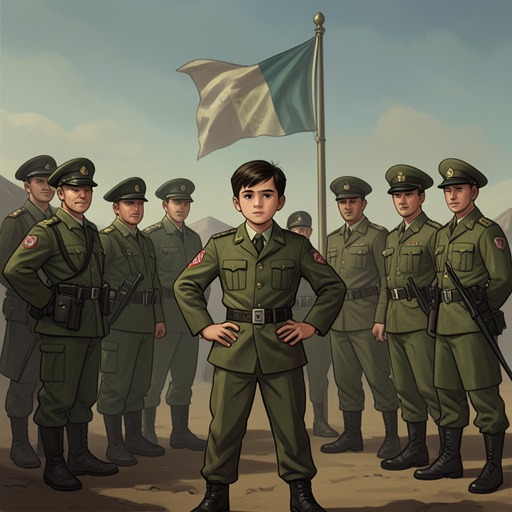
When Federal troops move toward the Ruthven plantations, Jack Ruthven recognizes that Mary Ruthven's property may be damaged and decides to go there with eight or ten members of the Home Guard. Darcy Gilbert objects that St. John Ruthven should protect his own place, since he has refused to join either the army or the Home Guard. Jack Ruthven nevertheless chooses action over resentment and sets out to see whether the plantation can be protected.
The Federal advance fills St. John Ruthven with supreme terror. Hearing the firing, he dresses, and Mary Ruthven tells him that the Yankees are coming and that he must arm himself to defend their home. His response is marked by chattering teeth and fear rather than command. The plantation thus becomes a physical measure of the difference between social rank and moral worth: the person most closely connected with its defense is paralyzed, while Jack Ruthven, who is an adopted member of the wider Ruthven family, moves toward the danger.
Fire and Jack Ruthven's Intervention
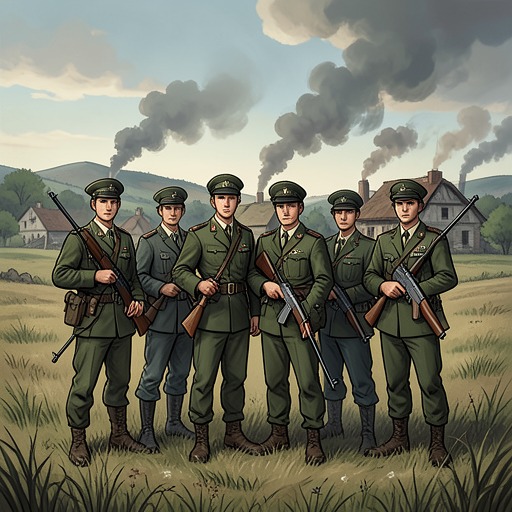
The immediate crisis comes after Confederate troops leave the plantation and Federalists appear. A report announces that the house is on fire; smoke rises in a large cloud, and flames break out in several directions. Jack Ruthven and his followers reach the roadway in front of the property at that moment. Instead of treating the fire as an unavoidable consequence of battle, Jack Ruthven orders the group to act, reasoning that the opposing forces have moved toward the mountain road and that there may still be time to save the house.
Jack Ruthven runs to the house and meets Mary Ruthven on the veranda. She regards the mansion as doomed, but he calls for every pail and bucket available and asks whether a ladder is at hand. The exchange turns the plantation from a symbol of threatened property into a scene of organized resistance and rescue. Jack Ruthven's authority here is practical rather than hereditary: it arises from his willingness to assess the battlefield, gather people and tools, and work before the flames make intervention impossible.
Narrative Significance
Mary Ruthven's Plantation stands within a wider network of places through which the novel's secrets and dangers circulate. The wreck on Hemlock Bluff rocks preserves the earliest visible clue to Jack Ruthven's unknown origin; the black tin box recovered from the burned Nautilus later carries papers that help restore Colonel Stanton's fortune; and the plantation is one of the locations where the consequences of that shipwrecked past are felt by the Ruthven household. The property is therefore more than scenery: it is one link between domestic inheritance, wartime destruction, and the unresolved question of parentage.
Its threatened house also forms a sharp contrast with the wreck. The wreck is charred, water-damaged, and conceals a heavy black tin box beneath dirt; the plantation is an inhabited home whose fire is visible and urgent. In both spaces, however, material survival determines whether the past can be recovered. A house may be defended with buckets and a ladder, while documents must be recovered from the wreck and later found among stolen goods in the guerrilla camp. The repeated movement of people and objects between these places gives the landscape a structural role in the novel's mystery.
The plantation's meaning finally depends on the behavior it exposes. St. John Ruthven's terror and earlier refusal of service make the property a setting for cowardice and neglected duty. Jack Ruthven's arrival, decision, and attempt to extinguish the flames make it a setting for courage and communal responsibility. Mary Ruthven's Plantation thus condenses one of the book's central contrasts: inherited possession can confer status, but only action under pressure demonstrates who is worthy to protect a home, a family, and the history attached to them.